Sunday, April 13, 2014

Ardennes Counter-offensive: southern front


The U.S. 112th Infantry under the 28th Infantry Division offered stiff resistance to Brandenberger's forces crossing the Our river bridges, upsetting their schedule by two days. But unfortunately the 109th and 110th infantry were spread so thinly that their position was easily bypassed. Both offered stiff resistance and threw the Germans off-schedule by several more days. The transport confusion on the German side, and the resistance of American strongpoints bought time for the U.S. 101st Airborne to reach Bastogne and set up defences.
By 19th December, as senior Allied commanders met in Verdun, it was known that Bastogne had ben bypassed and would be subsequently beseiged by the 2nd Panzer, 26th Volksgrenadier, and the PanzerLehr of 67th Panzer Corps. (The seige took place on the 21st morning)
Eisenhower realized that it was easy for the allies to counter the Germans when they (Allies) were in the open and on the offensive instead of defensive. Hence, they ordered massive reinforcements to the area.
Eisenhower asked General Patton how much time he would take to move his Third Army and counterattack. Patton replied, (to much disbelief) that he needed only 48 hours. In truth, he was anticipating movement orders and had ordered his army to begin moving towards Bastogne before even reaching the conference.
Meanwhile, Bastogne was facing a tough time with supplies depleting. Medical officers and equipment had been captured. But thankfully weather cleared over the next few days, and supplies (mainly Ammunition) were airdropped. The perimeter of Bastogne was held all through the German attacks.
The German commander Heinrich von Luttwitz offered an "honorable surrender" to General Anthony McAuliffe, the commanding officer of Bastogne. McAuliffe replied to their offer in one word, "Nuts" This reply became historically famous. The XLVII Panzer Corps launched concentrated attacks at the western perimeter but were unsuccessful, and soon on 26th January, General Patton's 4th Armored division spearhead broke through the seige to Bastogne.
Weather conditions had improved by 23rd December, allowing Allied air-attacks. Bombing raids were carried out on supply points and infantry was machine-gunned by attacking P-47 Thunderbolts. Allied air support also supplied Bastogne with the necessary supplies including volunteer surgeons, who were flown in by military glider.
By 24th December, the German advance was effectively stalled short of the Meuse. They had run out of rations and fuel supply was critical due to being cut off from supply lines. German losses upto now were light, notably in Armor (with the exception of Joachim Peiper). In the evening, General von Manteuffel recommended a withdrawal of all forces. But it was rejected by Hitler.
The Ardennes Offensive was also significant because it was the first incident where black soldiers fought shoulder-to-shoulder with their white counterparts. Facing shortage of personnel, Eisenhower ordered for black volunteers to come forward. Till then, the black, or "colored" soldiers had been serving as drivers and support staff, (with a few exceptions of tank destroyers and Army Air Force pilots) but when Eisenhower's orders came through, over 2000 of these soldiers volunteered to fight.

Saturday, April 12, 2014

Operation Carthage

Operation Carthage was an Allied air raid on the Gestapo building in Copenhagen. As the Allied armies pushed through Europe in Spring 1945, the Gestapo ruthlessly clamped down resistance movements.
Ever since the Normandy invasion, the Danish resistance had begun working in full force. On the invasion day itself, fifty Danish resistance personnel destroyed the Globus factory which manufactured parts for the V-2 rockets, and many more raids were carried out during the next six months

The SS responded by capturing and executing eight of the saboteurs on 23 june, and proclaimed an emergency in the capital.
In answer to the SS, 10,000 shipyard workers from Denmark's largest shipyards went on strike, and soon they were followed by tens of thousands of factory workers.
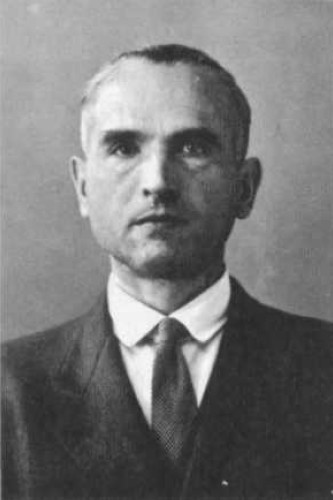
On the 30th of June, Hitler's personal ambassador for Denmark, Dr. Werner Best, (picturised below)

cut off electricity, gas, and water and executed a few more saboteurs. Copenhagen declared a general strike, and soon, open rebellion broke out during which a few hundreds were injured. These strikes and consequent sabotage resulted in a hold-up of several Wehrmacht divisions which were being moved to France to block and repel the invasion.
Werner's answer to this was an SS raid on EVERY police station in Denmark. 10,000 police personnel were arrested and 2000 of them were being deported to concentration camps.

Allied High Command immediately acknowledged the contribution of the Danish resistance movement and decided to help them. Intelligence was aware that the Gestapo Headquarters in Aarhus, Copenhagen, and Odense were interrogation centers, and that dangerous information about the resistance was documented in there.
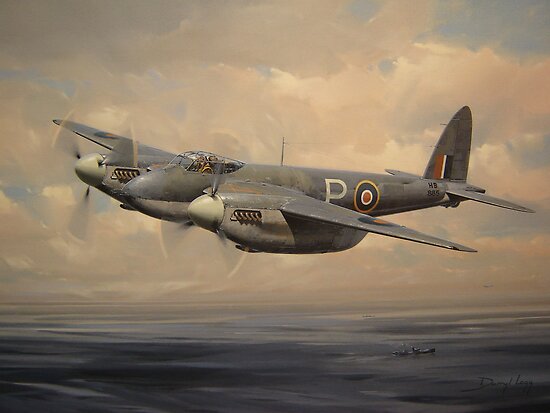
On 31 October 1944, total 25 de Havilland Mosquito aircrafts compiled from 21st Squadron RAF, 464th Squadron RAAF (Australia) and 487th Squadron RNZAF (New Zealand) hit the Aarhus buildings. In eleven minutes, they destroyed the two university buildings. Eugen Schwitzgeigel, Denmark Head of the Gestapo was killed in this raid.\
Air Vice Marshal Basil Embery suggested a raid on the Copenhagen HQ in November, and subsequently received support from Svend Truelsen, the head of the Danish resistance in London.
The building was a low U-shaped structure facing south, with the two flanks running northwards. It was originally the Denmark HQ of the Shell Oil Company, and was comandeered by the Gestapo in May `1943. The operation's purpose was to destroy the records and release the prisoners.

The same formation which had attacked Aarhus was tasked with the Copenhagen raid as well. First wave of four Mosquito aircraft's was led by Wing Cdr. Bob "Pinpoint" Bateson, and it also included Vice Marshal Embery himself. (21st Squadron RAF)
Second wave was led by Wing Cdr. Bob Iredale, with Six mosquito aircraft's. (464th Squadron RAAF)
And the third wave was lead by Wing Cdr. F. H. Denton, comprised of six mosquito aircraft's (487th Squadron, RNZAF)
Accompanying them were unarmed mosquitoes of Film and Photography department.

As soon as the mosquitoes reached the jutland coast, Bateson throttled up to 275 miles/hr. This was the signal for the entire formation to loosen out into the fan formation. Wind was calm, but visibility was low due to the windscreens clouded with dust and pulverized insects (They were flying at tree-top height)
They soon passed the Tisso Lake, and Bateson wobbled his wings again. This time, the second and third waves banked out, leaving Bateson and a few of the escorting P-51 Mustang fighters to bomb the target alone. The second wave then made a wide circuit of the lake and proceeded to target. The third wave did another circuit and proceeded to target. This separated the waves by around one minute.
Bateson was gaining on the target. The aircraft were spread 30 feet apart. The bomb-bay doors were open and the navigator was squinting at the windsheild. He suddenly pointed the pilot towards the camouflaged building of the Gestapo... the target of the raid.

Bateson came in first, and as bullets and tracers ripped past him from roof-top gunners of the target and surrounding buildings. He dropped his bombs and banked out. Vice Marshal Embery came in next. And first three bomb-loads had hit the target
But unfortunately, Wing Cdr. Peter Kleboe, who was not in forrmation got distracted by a searchlight and crashed into his tail-plane and then into the ground.
One mustang was hit while opening fire on the Anti-Aircraft defences. The raid was over in Four minutes.
Along with Kleboe and the Mustang, four other aircraft faild to return to base. One P-51 crashed on the west coast of Jutland and the pilot was taken prisoner. Two mosquitoes of 464th Squadron were shot down, and one from 487th Squadron crashed, killing the crew.

In spite of much collateral damage like the Jeanne d'Arc school, the raid was successful in destroying the records of the Gestapo concerning the Danish Resistance. A bonus was that resistance workers salvaged two filing cabinets full of names of collaborators.
After the final raid of the RAF on the Odense HQ, the Gestapo in Denmark was crippled. Denamrk was liberated only 18 days later

Friday, April 11, 2014

Ardennes Counteroffensive: Secondary operations (Greif & Währung)

Operation Grief and Währung were two secondary operations carried out by the 9th Waffen-SS division. They were commanded by Waffen-SS Commander Otto Skorenzy
The idea was to have German SS units infiltrate the Allied lines under the guise of American MP's and create certain level of confusion. Their primary objectives were important bridges on the Meuse and Our rivers. The commando units were assembled from the best English-speaking soldiers in the Waffen-SS and in some cases the Wehrmacht as well.
Unfortunately, these men had little knowledge of commando tactics, and there was little time to train them. They were given crash-course style training in certain skills like Radio operations, Demolition, etc. They also studied the U.S. Army's rank-and-field structure.


Dressed in US Army uniforms (the highest US Army rank used was that of colonel), armed with US Army weapons, and using US Army jeeps, the commandos were given three missions:
  • Demolition squads of 5 or 6 men were to destroy bridges, ammunition dumps, and fuel stores.
  • Reconnaissance patrols of 3 or 4 men were to patrol on both sides of the Meuse river and also pass on false orders to any American units they met, alter road signs, remove minefield warnings, and cordon off roads and warning of false mine-fields
  • "Lead" commando units would work closely with the attacking units to disrupt the US chain of command by destroying field telephone wires and radio stations, and issuing false orders.
 American MP's created roadblocks and asked questions to passing soldiers, questions every American was expected to know. This also resulted in detaining of General Omar Bradley by error. Due to this method, most of these soldiers were captured. But one positive impact it did have was that the rumors spread by these Germans circulated all the way to the Allied High command.
One rumor spread by such captured soldiers was that Skorenzy and his personal commandos were on a mission to capture Dwight D. Eisenhower. Because Skorenzy was well known about his rescue about Benito Mussolini, security around Eisenhower was increased, and hence he wasn't quite excited about spending the christmas of 1944 alone.

Tuesday, December 24, 2013

Ardennes Counteroffensive: Initial stages and planning

The Ardennes counteroffensive, or "Wacht am Rhine", as the Germans called it, was the biggest German surprise attack launched by the weakened German Wehrmacht. It was a fast and furious offensive which could buy some time for the Germans. German scientists had been working in full swing and had succeeded in creating a number of breakthroughs on flight tech, armor, missiles, etc. The only problem was that they weren't yet ready to mass-produce the technology. Hence, the German Wehrmacht launched this offensive. It was also one of the largest Tank battles ever fought.
The strategic objective of the forces was the port town of Antwerp. Taking Antwerp would split the enemy forces into two. It would take the Allies around eighteen months to recover, buying enough time for the Germans. It was named the "Battle of the Bulge" because the Ardennes region pushed into German territory in the shape of a bulge. 
After the breakout from Normandy, Allied troops marched onto Germany quicker than expected. Their supply lines were stretched extremely thin, as there was a lack of Deep-Water ports to land supplies. The Cherbourg port had indeed been captured, but it had been thoroughly destroyed by the Germans. The Allied forces captured Antwerp in early days of September, fully intact, but it wasn't operational until Late November, when it's estuary was cleared of German soldiers and Mines. And then there was Opn. Market Garden, brainchild of the so-called ""Sir"" Bernard Montgomery, which again screwed the Allies as it was a HUGE failure.
The Ardennes forest was chosen on Hitler's insistence, even though many Generals objected to this, for reasons unknown. Four Armies were selected for the operation. The Sixth Panzer Army under Josef Deitrich, was to attack the North from the German town of Monschau, ad was tasked with the primary objective-Antwerp
Josef Deitrich

The Fifth Panzer Army under Hasso von Manteuffel, was tasked the middle route, with the objective of capturing Brussels
Hasso Von Manteuffel

The Seventh Army under Gen. Erich Brandenberger, was tasked to the south, from the town of Echternach, with the task of protecting the flanks.
Erich Branderberger

Also, there was the Fifteenth army in a secondary role, under the command of Adolf von Zangen. They were tasked to hold the U.S. forces in place and to launch their own attack at will.
Adolf von Zangen


Before the attack, Allies were blind to German troop movements. Through France, the Resistance provided them with the necessary information. But as they reached the German border, the source dried up. There was a major crackdown in the Wehrmacht  after the 20 July plot to assassinate Hitler. Hence, security was tighter than ever. German soldiers building up in the woods were issued charcoal instead of wood to light fires. This helped to cut down on the smoke, and was less chance of the Allies detecting the build-up. The foggy weather also prevented the Allied Recon aircraft to survey the areas.For these reasons Allied High Command considered the Ardennes a quiet sector, relying on assessments from their intelligence services that the Germans were unable to launch any major offensive operations this late in the war. What little intelligence they had led the Allies to believe precisely what the Germans wanted them to believe-–that preparations were being carried out only for defensive, not offensive, operations. In fact, because of the Germans' efforts, the Allies were led to believe that a new defensive army was being formed around  the northern Rhine, possibly to defend against British attack.
 Josef Deitrich's 6th Panzer Army

Sunday, August 25, 2013

Ardennes Counteroffensive (Central front)


The attack on the Schnee Eiffel sector, under Hasso von Manteuffel, fared certainly better than the North, over the thinly spread 28th and 106th Infantry. Meanwhile, a junction n the center of the town of St. Vith was the main challenge for Manteuffel and Deitrich. 7th Armored and 106th Infantry division, and they success fully slowed the German advance through their counterattack. At Montgomery's orders, St. Vith was evacuated on 21 December; U.S. troops fell back to entrenched positions in the area, presenting an imposing obstacle to a successful German advance. By 23 December, as the Germans shattered their flanks, the defenders' position became untenable and U.S. troops were ordered to retreat west of the Salm River.Since the German plan called for the capture of St. Vith by 18:00 on 17 December, the prolonged action in and around it dealt a major setback.To protect the river crossings on the Meuse at Givet, Dinant and Namur, Montgomery ordered those few units available to hold the bridges on 19 December. This led to a hastily assembled force including rear-echelon troops, military police and Army Air Force personnel. British 29th Armored and the XXX corps began moving in on the Meuse.

The 16th Panzerlehr came up from the south as reinforcement for the 2nd Panzer division. The Ourthe river was taken on 21st December around midday. After a one-day delay due to lack of fuel, the Fifth Panzer Army moved on to the town of Marschell and Hargimont. Hagimont was taken hours later, but Marschell was held strongly by the US 84th Division. Leaving a small force at Marsche, the 47th Panzer Corps turned west toward the Meuse as ordered by their commander Heinrich Luttwitz.
Heinrich Luttwitz,
On 22/23 December, The wood near For-NotreDame were taken, few kilometres short of the town of Dinant. However, the narrow route exposed them to considerable danger from allied flanking attacks. On the 24th noon, the Panzerlehr took positions in the village of Celles, whie further west, units of the 2nd Panzer div. were in sight of the Meuse near Dinant.
An Allied blockade was hastily assembled, consisting units from the British 29th armoured, US 101 Airborne, and others. This force prevented the Panzer units from moving forward.
Allied flanks had now also begun posing a threat to the narrow corridor held by the 2nd Panzer Div. (Main) and hence, the attack in this sector also came to an end.

Friday, August 23, 2013

Operation Copperhead

Operation Copperhead was a small British Military deceptive operation before the Normandy Landings and was intended to mislead German intelligence as to the location of General Bernard Law Montgomery. It was well known that Monty was an important figure in the war, he would be part of any major offensive the Allies launched. Hence, Intel figured that if he were to be spotted outside of London, the Germans could be deceived that the Landings were to come at the south of France. Brig. Dudley Clarke was assigned to the operation, and soon he found a lookalike stage actor, Meyrick Clifton James in London. James was assigned to Monty's office, and had a few meetings with him, so as to familiarise himself with the general's mannerisms.
The Allies made use of their double-agent network to feed the idea that Monty would lead ground operations during the Invasion. On may 26 1944, James was flown overnight to Algiers, publicly parading through the airport and met Gen. Maitland Wilson, possibly to plan thye things ahead. He'd been seen in Algiers, smoking, drinking and staggering, hence he was flown the next day to Cairo. He was to remain hidden there until the public disclosure of Montgomery's presence in France. Meanwhile, double agents in North Africa were used to extend the masquerade for a few more days, by hinting Montgomery was still in the region.
The impact was very little, as the information of Monty being in Africa was not passed onto the German command in France. Bodyguard had done enough to convince the Germans, and Monty's drama added little to the picture

Monday, August 19, 2013

Ardennes Counteroffensive (Northern Front)

"Nuts!"


On 16 December 1944, at 0530 hrs, the German Army launched the offensive post a 90-minute artillery barrage along an 80-mile front, using 1600 pieces of artillery. In the North, Detrich's 6th Panzer Army hit the Loshiem gap in an effort to take Leige, Belgium. But these met unusually heavy resistance by the U.S. 2nd and 99th Infantry divisions. On the first day itself, an 18-man patrolling unit held up 500 German Fallschirmagers at Lanzerath village, which was a key route to the Loshiem Gap. Thius created a bottleneck in the German advance. A division of the 6th Panzer, led by Col. Joachim Peiper was tasked to take the Loshiem-Loshiemergraben Road, but they were held up due to heavy snowfall-blocked passes. This put him around 16 hours behind schedule.
Oberstgruppenfuerher Joachim Peiper

Peiper reached Bucholz town early on the 17th. He captured a fuel depot at Bullingen, and some units of the 3rd Battalion, 394th Inf. Reg.
Their intention was to control the twin villages of Rocherath-Krinkelt which would clear a path to the high ground of Elsensborn Ridge. Occupation of this dominating terrain would allow control of the roads to the south and west and ensure supply to Kampfgruppe Peiper's armored task force. The stiff American defense prevented the Germans from reaching the vast array of supplies near the Belgian cities of Spa` and Leige, and the road network leading to the Meuse river.
The previously mentioned 99th Inf. Div. suffered casualties, losing 20% of it's strength, 250+ killed, and approx. 2500 wounded. The casualties they inflicted on the Germans were 4000 dead, 60 tanks and cannons destroyed.

Driving to the south-east of Elsenborn, Kampfgruppe Peiper entered Honsfield, where they encountered one of the 99th Division's rest centers, clogged with confused American troops. They killed many, destroyed a number of American armored units and vehicles, and took several dozen prisoners who were murdered by elements of his force. Peiper easily captured the town and 50,000 US gallons (190,000 l; 42,000 imp gal) of fuel for his vehicles. Peiper then advanced north-west towards Büllingen, keeping to the plan to move west, apparently unaware he had nearly taken the town and unknowingly bypassed an opportunity to flank and trap the entire 2nd and 99th Divisions. Peiper turned south to detour around Hünningen, choosing a route designated Rollbahn D, as he had been given latitude to choose the best route west.

At 12:30 on 17 December, Kampfgruppe Peiper was near the hamlet of Baugnez, on the height halfway between the town of Malmedy and Ligneuville, when they encountered elements of the 285th Field Artillery Observation Battalion, U.S. 7th Armored Division. After a brief battle the lightly armed Americans surrendered. They were disarmed and, with some other Americans captured earlier (approximately 150 men), sent to stand in a field near the crossroads under light guard. About fifteen minutes after Peiper's advance guard passed through, the main body under the command of SS Sturmbannführer Werner Pötschke arrived. For reasons unknown to this day, the SS troopers suddenly opened fire on the prisoners. As soon as the firing began, the prisoners panicked. Most were shot where they stood, though some managed to flee. Accounts of the killing vary, but 84 of the POWs were murdered. A few survived, and news of the killings of prisoners of war raced through Allied lines. This incident became famous as the Malmedy Massacre
By now, Peiper was heavily behind schedule, as the retreating Americans had blown up bridges, and emptied fuel dumps. His vehicles were critically needy of fuel. It took him 36 hours from Eifel to Stavelot town, a move which had taken only 9 hours in 1940. They attacked Stavelot on 18th Dec. but were unable to take the town before the Americans evacuated a large fuel depot. Three tanks tried to take the bridge, but the lead vehicle was damaged by a mine. Following this, 60 grenadiers advanced forward but were stopped by concentrated American defensive fire. After a fierce tank battle the next day, the Germans finally entered the village when U.S. engineers failed to blow the bridge.
Not wanting to Waste more time, Peiper pushed an advance party to the bridge at Troise-Pontes`  leaving the bulk of his strength in Stavelot. When they reached it at 1130 on 18 December, retreating U.S. engineers blew it up in their faces. Peiper detoured north towards the villages of La Gleize and Cheneux. At Cheneux, the advance guard was attacked by American fighter-bombers, destroying two tanks and five halftracks, blocking the narrow road. The group got moving again at dusk at 1600 and was able to return to its original route at around 1800. Of the two bridges now remaining between Kampfgruppe Peiper and the Meuse, the bridge over the Lienne was blown by the Americans as the Germans approached. Peiper turned north and halted his forces in the woods between La Gleize and Stoumont. He learned that Stoumont was strongly held and that the Americans were bringing up strong reinforcements from Spa.
To Peiper's south, the advance of Kampfgruppe Hansen had stalled. SS Oberführer Mohnke ordered Schnellgruppe Knittel, which had been designated to follow Hansen, to instead move forward to support Peiper. SS Sturmbannführer Knittel crossed the bridge at Stavelot around 1900 against American forces trying to retake the town. Knittel pressed forward towards La Gleize, and shortly afterward the Americans recaptured Stavelot. Peiper and Knittel both faced the prospect of being cut off from their own lines.
On the dawn of 19 Dec., Peiper's Infantry from the 19th Panzergrenadiers surprised the American units defending the village of Stoumont. A Panzer attack followed the Infantry offensive, and the eastern edge of the village was taken. Help in the form of American Sherman units arrived, but by 1030 hrs, Peiper group succeeded in taking Stoumont. Knittel Group reported to Peiper saying that Eastern Stoumont was with the Americans yet again. Joachim Peiper made an assessment, and concluded that he didn't have enough fuel to cross the bridge and continue his advance tot take eastern Stoumont. He maintained control of the western sector for a while, but soon withdrew his lines back to the edge. The same evening, the 82nd Airborne under Maj. Gen. James M Gavin deployed by the La Gleize and held up Peiper's intended supply route.
Hansen group was struggling with terrain and stiff American  Schnellgruppe Knittel was forced to disengage from the heights around Stavelot. Kampfgruppe Sandig, which had been ordered to take Stavelot, launched another attack without success. Josef Deitrich ordered Hermann Preis to try backing up Peiper Group, but failed.
On the morning of 21st Dec. small units of the U.S. 2nd Battalion, 119th Regiment, attacked the dispersed Peiper Group. Peiper learnt that they were to reinforce at La Glaziele and ordered an immediate retreat.Attempting to withdraw from Cheneux, American paratroopers from the 82nd Airborne Division engaged the Germans in fierce house-to-house fighting. The Americans shelled Kampfgruppe Peiper on 22 December, and although the Germans had run out of food and had virtually no fuel, they continued to fight. A resupply mission by the Luftwaffe  went wrong when a Brigadier insisted that the co-ordinates supplied by Peiper were invalid. The supplies, instead, fell into American hands at Stoumont.
Meanwhile in Glaziele, Peiper group and co. set up defenses, waiting for the German resupply. But as they were unable to penetrate, He moved back to Germany on the 23rd morning. They were forced to abandon vehicles and other heavy equipment, taking only their guns and ammunition, as they'd exhausted every last drop of fuel while coming upto La Glaziele. The soldiers were able to escape.